Leather Derby Formal Shoes: How to Get the Fit, Formality, and Value Right
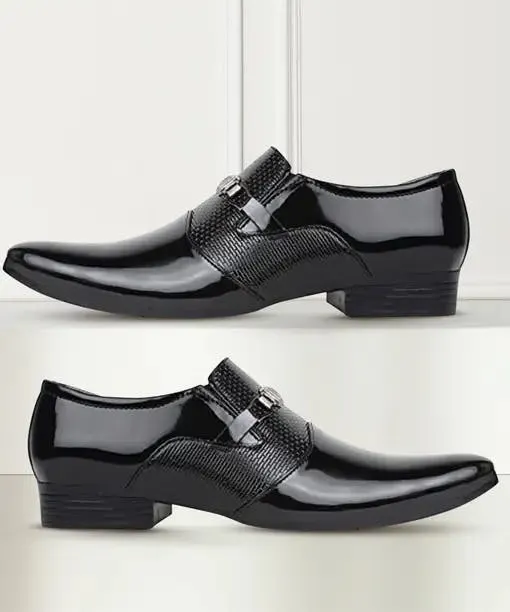
- Leather derby shoes are a strong formal choice for business formal and smart casual settings, but they sit one step below oxfords on the formality ladder and should not be your first pick for black-tie events.
- Open lacing (the defining feature of a derby) gives a more forgiving fit across a wider range of foot widths and instep heights, which makes them genuinely more comfortable for all-day wear than most oxfords.
- Full-grain leather uppers and leather soles are the two construction details that most directly determine long-term quality and how well the shoe holds a polish.
- The biggest mistake buyers make is choosing a black cap-toe derby as a black-tie substitute because it looks formal enough on the shelf. It rarely reads that way in the room.
- A plain-toe or cap-toe leather derby in black or dark brown covers most professional wardrobe needs for men who are not regularly attending white-tie or black-tie events.
- Broguing (decorative perforations) drops formality significantly, even on an otherwise well-made leather shoe. A clean-toe derby is always the safer formal bet.
Why Choosing the Right Formal Derby Matters More Than Most Buyers Expect
Most people shopping for men's dress shoes want something that looks formal, survives long days, and works across at least two or three different event types. The problem is that formal derby shoes occupy a middle ground that is genuinely useful but easy to misread. Buy the wrong version and you either underdress for the room or own a shoe that only suits one narrow occasion.
This article covers what separates a quality leather derby from a mediocre one, where derby formal shoes belong on the formality scale, and the specific situations where swapping to a different style would actually serve you better.
What Leather Derby Shoes Actually Are and Where They Sit on the Formality Scale
A derby shoe is defined by its open-lacing construction. The two quarters (the side panels holding the lace eyelets) are stitched on top of the vamp rather than underneath it. That single structural difference is what sets a derby apart from an oxford, and it has real consequences for both fit and formality.
Because the quarters are not closed, a derby laces open more freely. That gives more room around the instep, which suits wider feet, higher arches, and anyone who finds oxfords uncomfortably tight by mid-afternoon. This is not a minor comfort detail; for people with non-narrow feet, it is often the deciding factor.
On the formality ladder, leather dress shoes in derby construction sit just below oxfords. They read as business formal without any difficulty, pair well with lounge suits, and work across the range of smart formal settings most professionals encounter. Where they fall short is at black-tie events, where the expectation defaults to a plain-toe black oxford or patent leather shoe. A leather derby in that context is technically acceptable in relaxed interpretations of black-tie, but it signals awareness of the dress code rather than full compliance.
Leather matters here for two reasons. First, full-grain leather develops a patina over time that synthetic materials cannot replicate. Second, only leather can be polished back to a mirror shine when the upper dulls, which directly affects how long the shoe looks presentable in formal settings. Bonded leather and most faux leathers crack at the fold line within a year of regular wear.
Evaluating Leather Derby Formal Shoes Before You Buy
The sections below move from the biggest formality questions first, then into construction quality, and finally into fit. That order reflects how most buyers actually make mistakes. They get the formality level wrong before they even think about leather grade or sole type.
Formality Level and When to Choose a Derby Over an Oxford
For day-to-day business formal, interviews, client-facing roles, and most smart formal occasions, a plain-toe or cap-toe leather derby does the job without compromise. The shoe looks polished, pairs cleanly with suits in most cuts, and carries enough formal weight that it will not read as casual in professional settings.
The moment you need to wear black-tie, the oxford becomes the right call. The closed-lacing system on an oxford creates a cleaner line across the top of the foot, and that visual tightness is part of what makes the shoe read as appropriately formal in evening dress contexts. A derby, even in the same leather and colour, has a slightly more open silhouette that reads less severe in direct comparison.
Where buyers often get this wrong is in assuming that because a derby looks dressed up, it is interchangeable with an oxford for any formal setting. That assumption holds in most business contexts but not at events where dress codes are taken seriously. If the invitation says black-tie, wear an oxford or patent leather shoe.
What to Look for in Leather Quality and Finish
Full-grain leather is the top grade. It has not been sanded or buffed to remove surface imperfections, which means the grain is intact and the leather is at its most durable. It scuffs, but those scuffs polish out. It creases with wear, but those creases deepen into character rather than cracking. For formal derby shoes used more than once or twice a month, full-grain is the only grade worth buying.
Top-grain leather (the next grade down) has had the surface layer lightly sanded, which removes some durability in exchange for a more uniform appearance. It still polishes well and lasts longer than corrected or bonded leather, but it does not develop the same depth of patina. It is a reasonable choice for occasional formal wear or tighter budgets.
For finish, a smooth plain leather upper holds formality better than a textured or pebbled grain. Glossy finishes (like those used in Oxfords made for evening wear) are not typical on derbies, but a well-polished smooth leather should have a clean, even sheen that does not look matte or plastic.
Sole, Toe Shape, and Stitching
Leather soles are the traditional choice for formal dress shoes and offer better flexibility and breathability than rubber soles. They also add formality to the overall silhouette because of how thin and clean they look in profile. The trade-off is that leather soles offer minimal grip on wet surfaces and wear faster than rubber, especially at the heel. Many buyers add a thin rubber toe cap or half-sole at a cobbler to extend life without significantly changing the look.
Rubber soles on a leather derby are practical and far more common in modern formal shoes. They grip better and last longer, but they do add visible thickness to the profile. For business formal settings this is rarely an issue. For dressier occasions, the rubber sole may draw the wrong kind of attention if the rest of the shoe is very sleek.
Toe shape affects formality directly. A pointed or slightly tapered toe reads more formal than a rounded or square toe. For men's dress shoes intended as formal derby shoes, a medium-pointed or almond toe is the most versatile shape, dressy enough for formal contexts without looking extreme. A very blunt or square toe risks reading as casual or dated.
On stitching, Goodyear welt construction (where the upper is stitched to a welt strip, which is then stitched to the sole) is the quality benchmark. It allows resoling, which extends the shoe's life by years and protects the investment in good leather. Cemented construction (glued soles) is more common at lower price points and cannot be resoled cleanly once the bond fails.
Fit Considerations Specific to Derby Construction
The open-lacing system on a derby means the shoe can accommodate a wider range of foot widths than a comparable oxford in the same size. If you have a medium to wide foot or a high instep, a derby will typically fit more naturally and require less break-in time. This is not just a comfort preference; a shoe that is too tight in the instep will crease badly at the toe box, which shortens the leather's lifespan.
For narrow feet, the open quarters can sometimes leave the shoe feeling slightly loose or less precise around the instep. An oxford's closed lacing holds the foot more securely in those cases. If you are between widths, try both styles before committing.
Break-in time for full-grain leather derbies is typically shorter than for oxfords due to the open lacing allowing some flex from the first wear. Wearing the shoes with thick socks for the first few outings and using a cedar shoe tree after each wear helps the leather settle without creasing in the wrong places.
What Buyers Get Wrong and What It Actually Costs Them
The most common mistake is buying a brogue derby and expecting it to cover formal occasions. Broguing (the perforated detailing along seams and the toe cap) explicitly signals a less formal shoe. A heavily brogued derby in brown leather is a smart casual shoe, not a business formal or smart formal shoe. Using it as one creates a visible mismatch that reads as either unaware of dress codes or indifferent to them.
The second common mistake is buying glued-sole derbies at a mid-range price and treating them as a long-term formal wardrobe investment. A cemented shoe that costs $150 to $200 will need replacing within two to three years of regular wear. A Goodyear-welted leather derby at $300 to $400 can be resoled twice and may last a decade with proper care. The per-year cost often favours the more expensive shoe.
Maintenance habits affect this calculation significantly. Leather dress shoes need conditioning every six to eight weeks in regular rotation, more often in dry or cold climates. Skipping this causes the leather to dry out, crack along the flex point at the toe box, and lose the ability to hold a mirror polish. A shoe that arrives looking excellent and receives no care will look worn and dull within a season.
Polish choice also matters. A wax-based cream polish feeds the leather and builds shine. A hard wax (like carnauba) goes on top for mirror-finish results but does not condition. Using only hard wax without a cream conditioner dries the leather over time. Most formal derby shoes benefit from a cream polish application monthly and a light hard-wax buff before formal events.
How Derby Shoes Relate to Oxfords, Brogues, Cap-Toes, and Loafers
Understanding adjacent categories helps clarify exactly where formal derby shoes belong and when to reach for something else.
Oxfords are the closest relative. The only structural difference is the closed-lacing system. Oxfords read slightly more formal, are better suited to black-tie and very formal business settings, and suit narrower feet more naturally. If your formal wardrobe has room for one pair and you regularly attend formal events, an oxford is the default recommendation. If you have a wider foot or prioritise all-day comfort in business formal settings, a derby is the better choice, not a compromise.
Cap-toe derbies are the most formal configuration of the derby style. The horizontal seam across the toe box adds visual structure and elevates the shoe's formality compared to a plain-toe derby. In black leather, a cap-toe derby is a strong all-purpose formal option. It sits close enough to oxford formality to work in most professional settings without the fitting constraints of closed lacing.
Brogues should be treated as a separate category for wardrobe planning purposes, even though many derby shoes come in brogue versions. A brogue derby sits in the smart casual to business casual range depending on leather colour and finish. It is not a formal shoe in the strict sense, even if it looks dressed up compared to other casual footwear.
Loafers occupy a different niche. A well-made leather penny loafer in black can work in smart casual and some business casual contexts, but it does not carry the formality of a laced leather shoe. For formal settings, a loafer is typically not the right call unless the dress code is explicitly smart casual or the environment is fashion-forward.
Frequently Asked Questions
Can I wear leather derby shoes to a black-tie event?
Technically, a plain-toe black derby in well-polished smooth leather will pass at more relaxed black-tie events. However, the expected shoe for black-tie is a plain-toe black oxford or patent leather evening shoe. If the event is formal and the host or dress code takes it seriously, default to an oxford.
Are leather derby shoes appropriate for job interviews?
Yes. A plain-toe or cap-toe leather derby in black or very dark brown is appropriate for nearly all interview settings, including conservative industries like law and finance. The key is clean leather, a good polish, and a leather or thin rubber sole. Avoid brogues for formal interviews.
How often should I polish formal derby shoes?
Apply a leather cream conditioner every four to six weeks if the shoes are in regular rotation. Use a wax polish for shine before formal events. After every wear, wipe off dust, use a brush to restore the surface, and insert cedar shoe trees to maintain the shape and absorb moisture.
What is the difference between a derby and a blucher?
The terms are often used interchangeably, though some makers distinguish them by the angle of the eyelet tabs or the number of eyelets. For practical purchasing purposes, any open-laced dress shoe is typically sold as either a derby or a blucher. The fit and formality characteristics are the same.
Do leather derbies work with both suits and smart casual outfits?
Yes, a plain-toe derby in dark brown or oxblood leather bridges the gap well. It works with a lounge suit for business formal and with chinos and a blazer for smart casual. Black derbies are more strictly formal and look less natural in smart casual contexts unless the rest of the outfit is dressed up.
Is Goodyear welt construction worth the extra cost for formal derbies?
For shoes you plan to wear more than once a week, yes. Goodyear welt allows resoling, which effectively multiplies the lifespan of the upper leather. For occasional formal wear (a few times a year), a well-made cemented shoe from a reputable brand is a more cost-effective choice if budget is a constraint.